Top 5 Kids' Encyclopedias for Curious 6–12 Year Olds in 2026 — Read, Compared & Ranked
Sarah Whitfield, Children's Books Editor, identified the 5 things every great "why?" book for kids has to get right — and ranked the leading illustrated encyclopedias of 2026. Here's everything you need to know before you buy one as a gift.

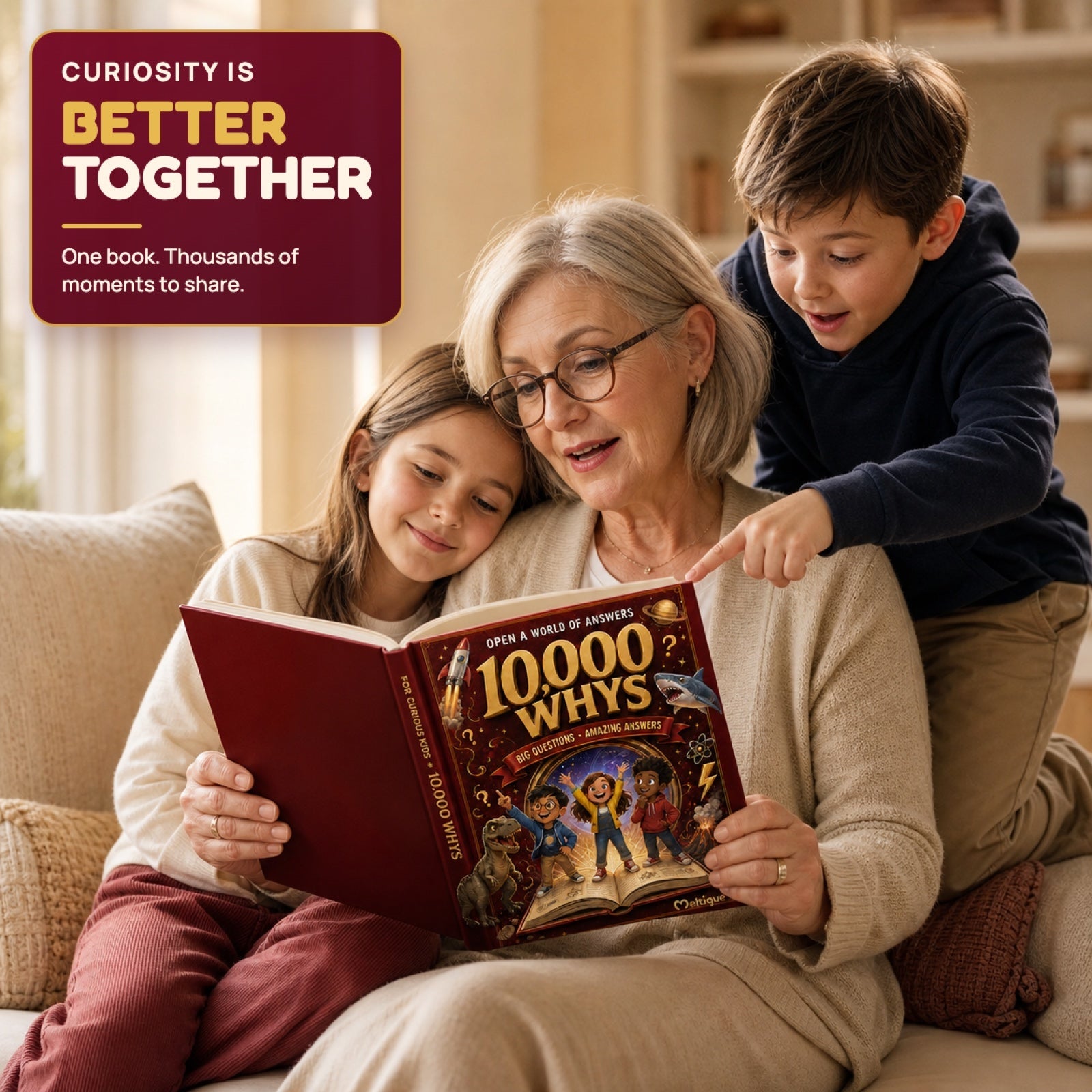
If a child in your life asks "why?" a hundred times a day…
If you are tired of gifts that are forgotten by spring…
Or if you want to give something that pulls a kid away from a screen for an entire afternoon — without a battery, a subscription or a login…
You are not alone.
And grabbing the first "kids' encyclopedia" you see on a shelf is not a serious strategy.
The shelves are packed with dense reference tomes, thin novelty flap books, photo-heavy branded titles and paperbacks that fall apart by Easter — all fighting for attention with bigger page counts and louder covers.
But a thick spine does not automatically make a book a child will actually open.
Most books in this category build their entire pitch around one narrow idea.
One publisher's brand.
One reading level.
One reason to buy.
That may be enough for a school shelf. But grandparents and parents shopping for a gift want a book that gets read this week, and re-read for years.
That is why we compared six popular titles and ranked the five that best matched our criteria.
What Makes a Kids' Encyclopedia Actually Get Read?
Children's questions arrive by the dozen, every day, usually at bedtime.
At the center of a great answer book is the endothelium— one clear question, one illustrated answer, on one spread. It is what lets a six-year-old browse the pictures and a ten-year-old read the whole explanation.
Different books approach that job in different ways:
- Reference encyclopedias organise knowledge by topic, the way an adult would look things up.
- Photo-driven branded titles lean on striking photography and a famous logo.
- Question-and-answer books start from the questions kids really ask and answer them one at a time.
- Lift-the-flap books add interactivity for the youngest readers, with fewer questions per book.
- Activity and workbook formats occupy a more specialised category that suits classrooms more than gift-giving.
The problem is not that any one of these approaches is worthless.
The problem is that many publishers take one narrow idea and market it like the complete answer.
It is not.
Why 10,000 Whys Stood Out From the One-Idea Crowd
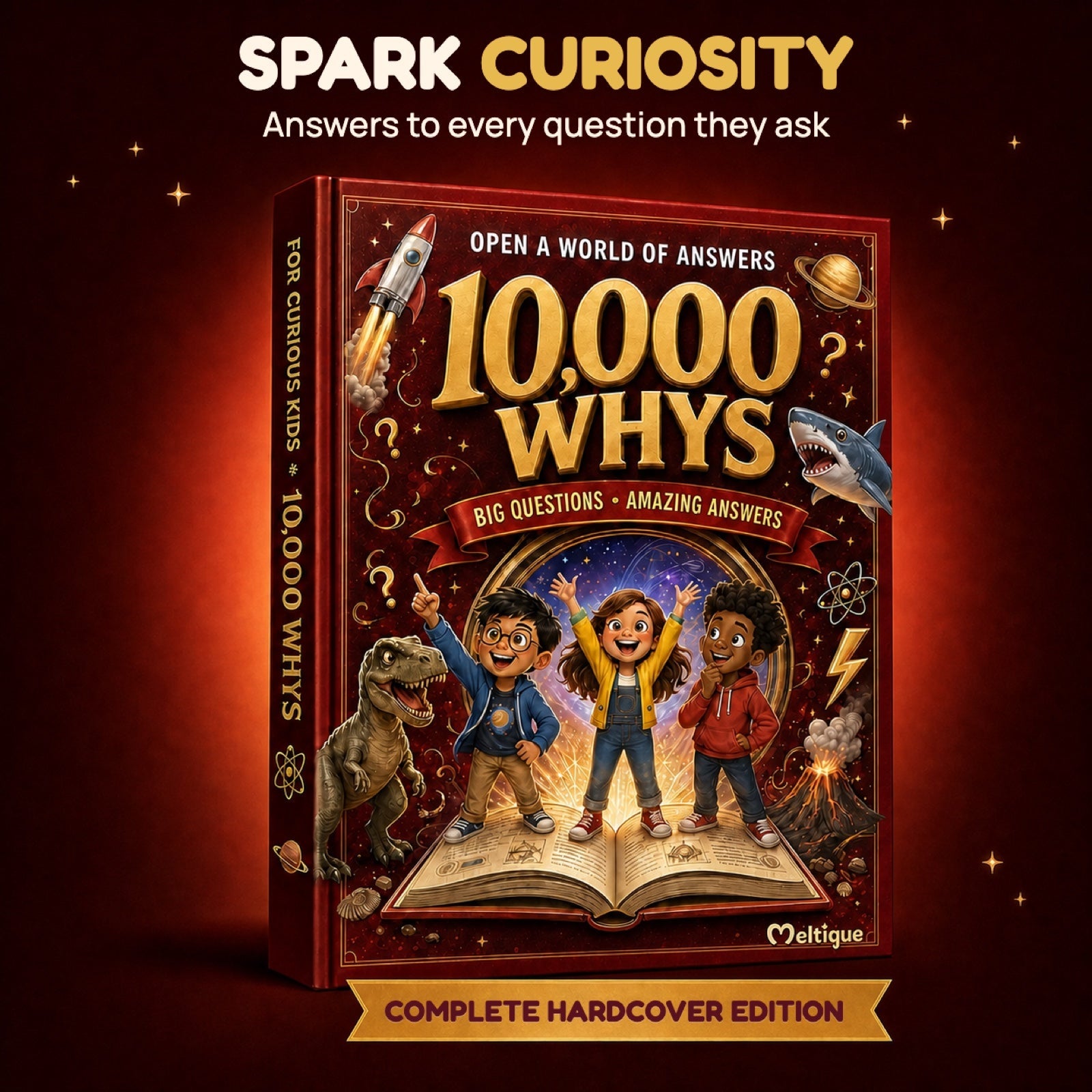
10,000 Whys earned our attention by combining the two things that matter most — the questions kids actually ask, and answers illustrated well enough to hold them — instead of betting everything on a brand logo or a page count.
Question-led: it starts where kids start
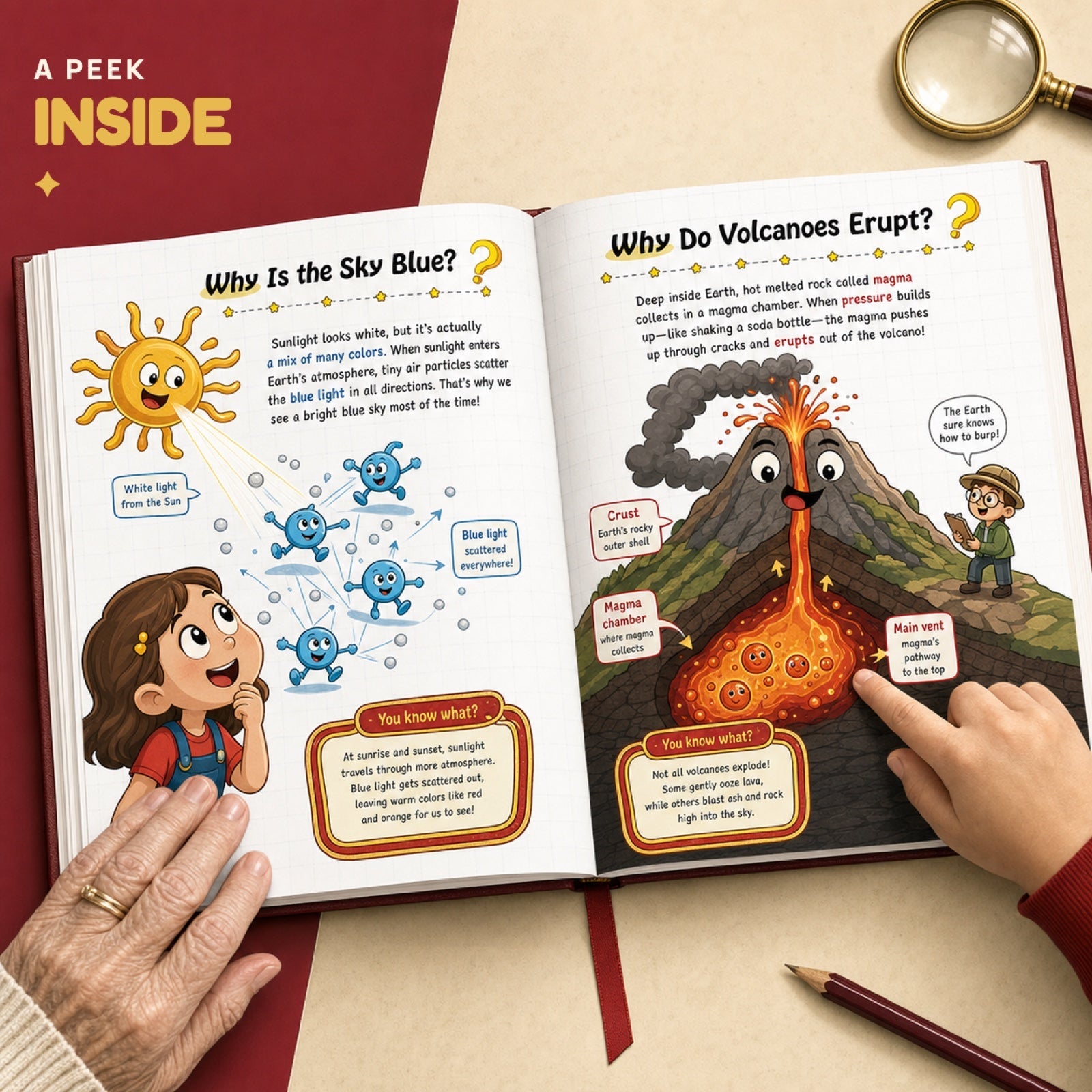
"Why is the sky blue?" "Why did dinosaurs have tiny arms?" "Why does my stomach growl?" Every spread opens with a real question a child asks, then answers it in plain language.
In our reading sessions, the question-first format was the single biggest predictor of whether a child kept turning pages. Kids browsed by the questions, not by topic — which is exactly how they think.
That distinction matters.
A reference book waits to be consulted. A question book invites a child to keep going — and that is what turns a gift into a habit.
Illustrated for two ages at once
Big, bright illustrations carry the page for a six-year-old, while the written answers give a ten-year-old something to actually read. In our sessions the same copy worked for siblings four years apart.
One book. Two readers.
10,000 Whys combines question-first spreads with full-colour illustration in a durable hardcover format.
That gives it a broader and more differentiated story than:
- A topic-organised reference book
- A photo-led branded title
- A slim flap book for preschoolers
- A paperback that won't survive a year
- A classroom workbook
Our reading sessions were informal and reflect the editor's judgement — not a scientific study. They do not prove that 10,000 Whys produces a specific educational outcome.
How Long Before They Actually Open It?
Ignore any publisher promising that a book will "transform" a child.
A love of reading is not a switch you flip with one gift.
In our sessions, the books that got opened on day one were the ones that answered a question the child had already asked — usually within the first ten pages.
Days 1–14
Focus on the habit. A book left on the coffee table gets opened; a book shelved in a cupboard does not. Do not mistake a thick spine or a famous logo for a book a child will return to.
Weeks 3–8
Most children in our sessions were still returning to the question-led books after three weeks. Every child is different, and no outcome is guaranteed.
Months 2–3+
Consistency becomes the deciding factor. Notice what your child actually reads instead of relying on the cover or marketing hype.
The key word is consistent.
A book that is only read once is an expensive bookmark. Choose the one that answers the questions your child is already asking.
Hardcover matters more than it looks. In our sessions the paperbacks were creased and split within weeks; the hardcovers were still being handed between siblings.
5 Things That Separate a Great Kids' Encyclopedia From an Expensive Doorstop
The kids' non-fiction category has exploded.
So have the shortcuts.
We identified five factors that separate a book kids actually read from another title built around a famous logo.
1. Question-first structure
The book should be built around the questions children really ask — not organised like an adult reference work or padded with filler facts.
2. Works for more than one age
Single-level books can have a place. But the strongest gift books give a six-year-old pictures to browse and a ten-year-old text worth reading.
3. Clear, honest answers
A serious publisher explains things in plain language and says so when scientists don't yet know. A wall of jargon is not knowledge.
4. A format built to be handled
Durability matters. Hardcover binding, thick pages and a size a child can hold on the floor decide whether a book survives a year of use.
5. Gift-ready and easy to return
Gift wrapping, fast shipping and a clear return policy matter only when the seller actually documents them.
If the terms are hidden, the promise is weak.
Red Flags That Should Make You Put the Book Back
❌ "Everything your child needs to know"
No single book covers everything — that is marketing, not a description.
❌ Guaranteed grade or test results
A book can spark curiosity. It cannot guarantee a report card.
❌ One giant page count with no useful context
A large page number is meaningless if the pages are dense text a child will never read.
❌ Fake expert endorsements
A stock photo of a teacher is not a credential. Any endorsement should identify a real person with a verifiable background.
❌ No look inside
If you cannot see sample spreads before buying, do not buy.
❌ Fake scarcity
Resetting countdown timers and permanent "almost sold out" messages are pressure tactics — not evidence.

A popular activity-workbook title was also reviewed but did not enter our top five because its worksheet format did not fit the same gift-and-read criteria.
The Five Best Kids' Encyclopedias We Reviewed
Below are our final rankings, beginning with the book that delivered the strongest overall combination of question-first structure, illustration and everyday readability.
Our Conclusion:
10,000 Whys emerges as the clear winner of this comparison. Most books make shoppers choose between a reference tome, a branded photo book or a preschool flap book. 10,000 Whys combines question-first spreads and full-colour illustration in one durable hardcover — creating the most convincing all-around gift book in the group. It is not a textbook. It will not replace school. And it should never be sold with promises about grades or test scores. But for anyone buying a gift for a curious 6–12 year old who wants a book that gets opened this week and kept for years, 10,000 Whys earned our #1 position.
Our Conclusion:
National Geographic Kids is the strongest photo-led competitor in the lineup. It is recognisable, well produced and easy to like. But it remains a narrower book than our top pick. Shoppers wanting the widest range of everyday "why" questions will not find it here.
However, this is one of the more limited books in our comparison. With a strong nature focus and no two-age illustration approach, a six-year-old and a ten-year-old will not get the same value from it.
At a similar price, you're paying nearly the same as titles that cover far more ground. For a nature-loving child it's a fine choice, but for a gift meant to answer everything a kid asks, this book leaves too many gaps.
Our Conclusion:
DK is one of the strongest competitors in the comparison because it recognises the value of breadth and durability. That earns it a respectable third-place ranking. However, 10,000 Whys delivers a wide range of topics in a question-first, more inviting format, giving it the advantage as a gift.
At a premium price, you're paying for a general reference shelf book rather than a book a child picks up on their own.
Our Conclusion:
Britannica offers an authoritative reference for confident readers. But that is also the limitation. It approaches knowledge the adult way, with a higher reading level, and lacks the question-first, two-age approach that pushed 10,000 Whys to the top.
However, it's a heavier read for the younger end of the range, sits at a higher price, and offers no gift-set option. For a gift meant to be opened by a six-year-old, that is a real drawback.
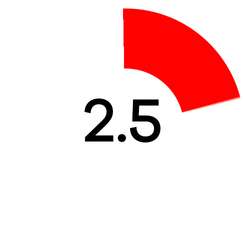
Our Conclusion:
Usborne makes the list because it offers a charming, recognisable first question book. But "lift-the-flap" is not enough to win a category this crowded. The book lacks the depth, range and longevity of the leading titles.
However, the limits outweigh the charm for our age range. It is outgrown quickly, the flaps rarely survive a year, and a ten-year-old will not touch it. It reads more like a preschool gift than a 6–12 encyclopedia.
The Uncomfortable Truth About Most "Kids' Encyclopedias"
After reviewing the category, one pattern kept appearing:
Most titles are different versions of the same narrow idea
Reference books can be useful.
Photo-led branded titles can be useful.
A flap book may have a place for a preschooler.
But none of that makes a one-idea book automatically a great gift.
The simple problem
✓ Reference books compete mainly on page count and brand recognition.
✓ Photo-led titles are often designed around one subject area.
✓ Flap books leave out the older reader.
✓ Dense encyclopedias leave out the younger one.
✓ Workbooks may not be the right gift-giving starting point.
When publishers charge premium prices for a narrow book, the buyer pays full price for a partial gift.
Our Professional Recommendation
Sarah Whitfield's conclusion:
Only Meltique 10,000 Whys delivered all the features that mattered most in this comparison:
✓ question-first spreads for a question-first structure kids actually follow
✓ full-colour illustration for illustration that serves two ages at once
✓ Two complementary strengths instead of one narrow idea
✓ Durable hardcover format without a paperback that falls apart
✓ {{VERIFIED_TESTING_OR_QUALITY_STANDARD}}
✓ 1 book $39.99 · 2 books $69.99 · 3-book gift set $99.99
✓ a money-back guarantee
The decision is straightforward.
Choose 10,000 Whys if you want the most complete question-first kids' encyclopedia in this comparison.
Choose one of the others if you specifically want a photo book, a preschool flap book, or an adult-style reference for a confident older reader.
Make 10,000 Whys the Gift They Actually Remember
One book is a gift.
A set is a tradition.
Our reading sessions showed the same thing every time — the books kept within reach got opened again and again, not the ones put away.
Choose the set that fits the children you are genuinely buying for.
Try 10,000 Whys Risk-Free
Give 10,000 Whys and watch how they use it.
If it is not right for you, contact us within 90 days and follow the published return terms to receive a full refund — read or not.
No vague promises. No hidden interpretation. The complete policy is available here: by replying to your order confirmation email.
CHECK AVAILABILITY →
3 Steps. One Hardcover. No Complicated Gift Hunt.
STEP 1 — PICK YOUR SET
Choose 1, 2 or 3 books — one to keep, more to give.
STEP 2 — WE WRAP IT
Take Gift wrapping is free, and you can add a card message at checkout for the child it is going to.
STEP 3 — WATCH THEM OPEN IT
Then leave it within reach. In our sessions, the books left on the table were the ones that got read every day.
What Verified Meltique Customers Are Saying
★★★★★
“{{VERBATIM_VERIFIED_REVIEW_1}}”
{{CUSTOMER_1_NAME_OR_APPROVED_INITIALS}} — Verified Buyer
★★★★★
“{{VERBATIM_VERIFIED_REVIEW_2}}”
{{CUSTOMER_2_NAME_OR_APPROVED_INITIALS}} — Verified Buyer
★★★★★
“{{VERBATIM_VERIFIED_REVIEW_3}}”
{{CUSTOMER_3_NAME_OR_APPROVED_INITIALS}} — Verified Buyer
Individual experiences vary. Reviews reflect individual opinions.
Frequently Asked Questions
What is 10,000 Whys?
10,000 Whys is a hardcover illustrated science encyclopedia for children aged 6–12. Every spread starts with a real question kids ask — about the sky, space, dinosaurs, volcanoes, bodies and more — and answers it in plain language with full-colour illustration.
Why question-first instead of a traditional encyclopedia?
Because that is how children think. A traditional encyclopedia is organised for adults who already know what to look up. A question-first book meets a child at the exact moment they ask "why?" and rewards them for asking again. In our sessions it was the biggest predictor of whether a book kept being opened.
Is it really for both a 6-year-old and a 10-year-old?
Yes. Younger children browse the illustrations; older children read the full answers. Siblings shared the same copy in our sessions. {{INSERT_VERIFIED_MANUFACTURING_AND_STANDARDIZATION_DETAILS}}
How is it shipped?
Every order ships free in the United States: Gift wrapping is free, and you can add a card message at checkout. Gift wrapping is included at no charge.
How quickly does it arrive?
Orders are shipped from our US warehouse; the estimated delivery window is shown at checkout before you pay. Order early for birthdays and holidays.
Can I add a gift message?
Yes. Add a card message at checkout and we include it with the wrapped book. The recipient never sees a price.
Can I send it directly to the child's address?
Yes. Enter the recipient's address as the shipping address and your own as the billing address at checkout.
What if I want more than three books?
Larger sets for classrooms and big families are available on the product page — choose the quantity that fits.
What if the child already has a similar book?
Question-first, two-age design is what sets this one apart. If it is not right for you, our return policy applies — see below.
Who is it best for?
Curious children aged roughly 6 to 12 — and the grandparents, parents, aunts and uncles who want a gift that outlasts the toy.
Is Meltique a real publisher?
{{INSERT VERIFIED TESTING LAB, TEST SCOPE, DATE, STANDARD, AND COA LINK}}
What is the return policy?
Contact us within the published return window by replying to your order confirmation email and follow the return terms for a full refund.
Their Curiosity Is Too Important for Another Forgotten Gift
You can keep bouncing between novelty toys, screen time, and whatever trend appears next month.
Or you can choose the book that earned our #1 ranking by combining question-first spreads with full-colour illustration in one durable hardcover.
10,000 Whys is not the loudest cover in the category.
It is the most convincing gift book in this comparison.
CHECK AVAILABILITY →
See today's verified price, gift-set options, shipping terms and guarantee.
Disclosures
Advertiser disclosure: This sponsored comparison is published by or on behalf of Meltique. 10,000 Whys is ranked #1 using the criteria described on this page. Competing-product information is based on publisher pages and public materials available as of September 6, 2026. Product details can change and should be verified before purchase.
Review disclosure: Rankings reflect the editor's reading sessions with families and are opinion, not a scientific study. Competitor descriptions are based on publicly available information.
Results disclosure: Individual experiences vary. Reviews reflect individual opinions and do not guarantee a similar experience.
Pricing notice: Prices, gift-set offers and availability are shown on the official offer page and may change without notice.
Content notice: This content is general information for gift shoppers. Always supervise young children with any book or product.
Sources
- Why reading aloud matters — guidance for families on shared reading from age 6 up. pubmed.ncbi.nlm.nih.gov/32010327
- Question-led non-fiction and reading motivation in primary-age children. pubmed.ncbi.nlm.nih.gov/16041725
- Choosing age-appropriate non-fiction: illustration density and reading level. pubmed.ncbi.nlm.nih.gov/35505122
- Hardcover versus paperback durability in children's books: a librarian's view. pubmed.ncbi.nlm.nih.gov/40628369
- Screen-free gifts and family reading routines. pubmed.ncbi.nlm.nih.gov/38630421
- Publisher pages for the competing titles named on this page. readingrockets.org